
Stamping · Tooling · Milling
Capabilitiestooling to finished part.
Tool and die making, die striking, blanking, piercing, forming and CNC milling, in one Pawtucket facility, so a part goes from print to press without leaving the building.
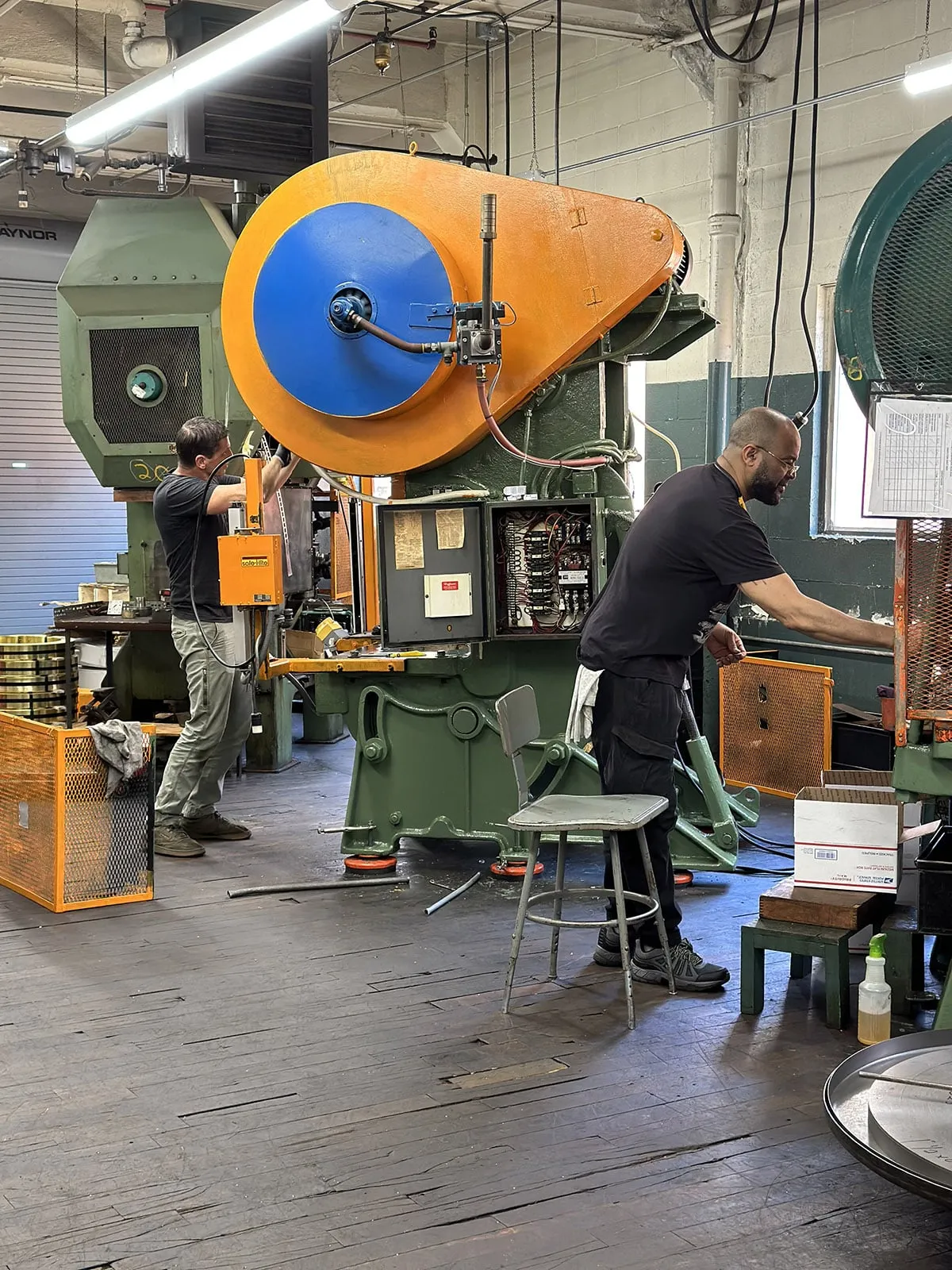
One building, one schedule
- 01
Design
Your artwork, print or sample, prepared for tooling.
- 02
Tool & Die
Dies built and maintained in our own tool room.
- 03
Coin, Strike & Stamp
Coining, die striking, and progressive, transfer and automatic stamping.
- 04
Finish & Ship
Polished, plated, assembled, packed and shipped from Pawtucket.
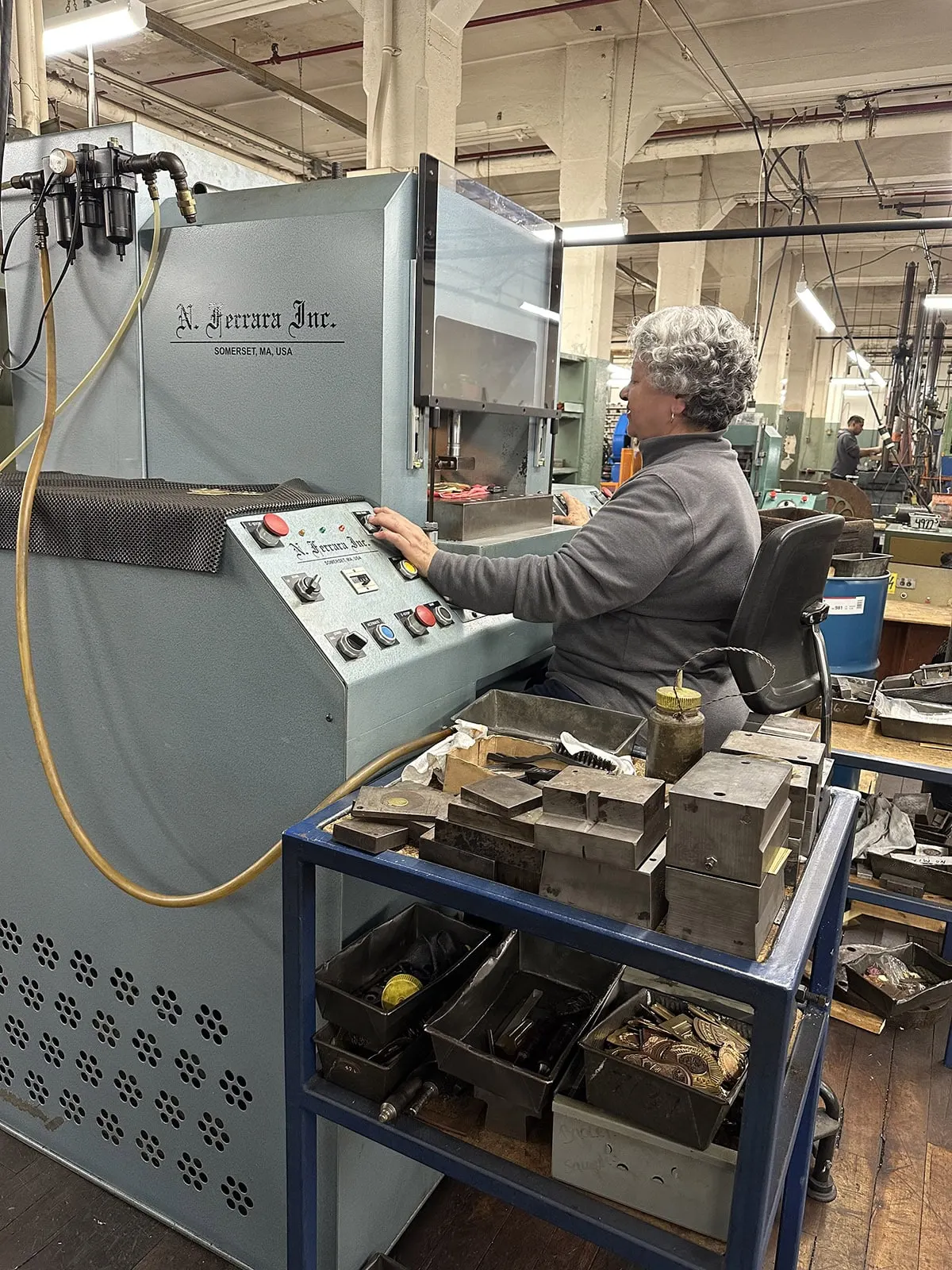
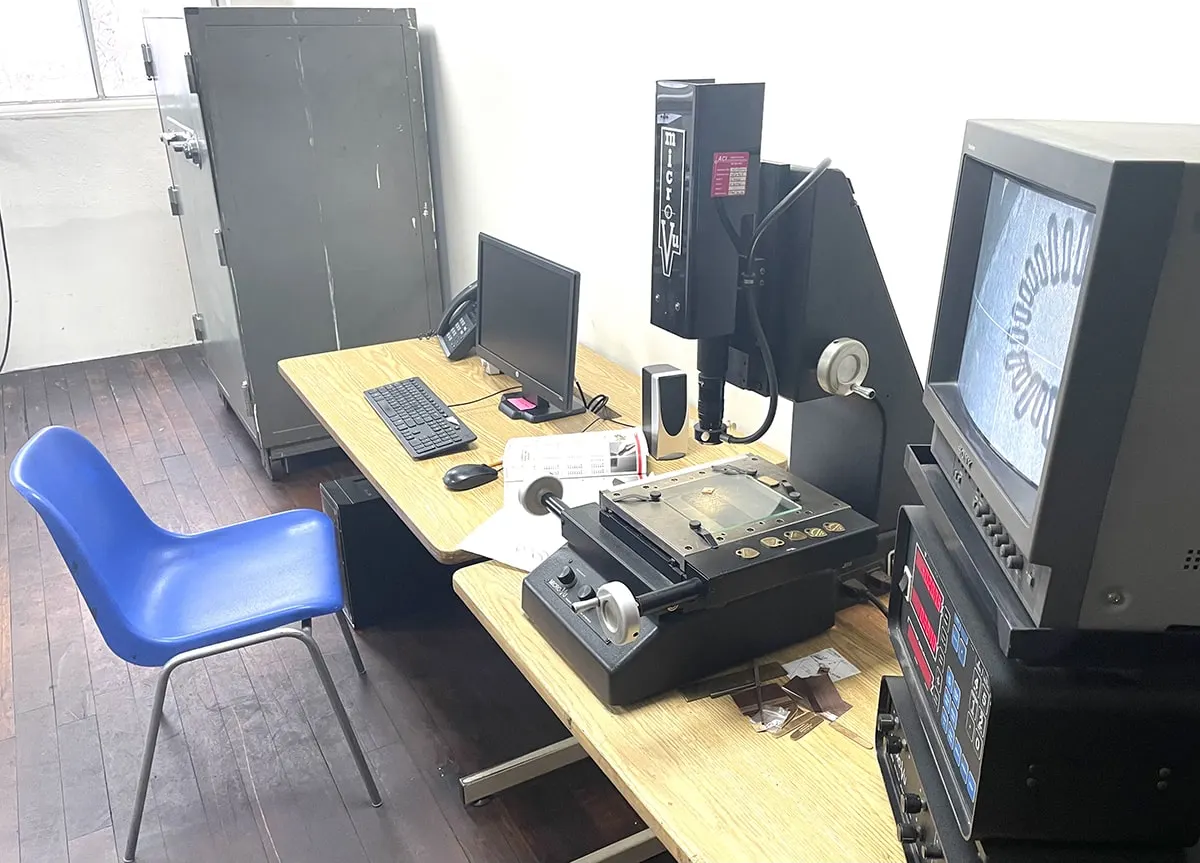
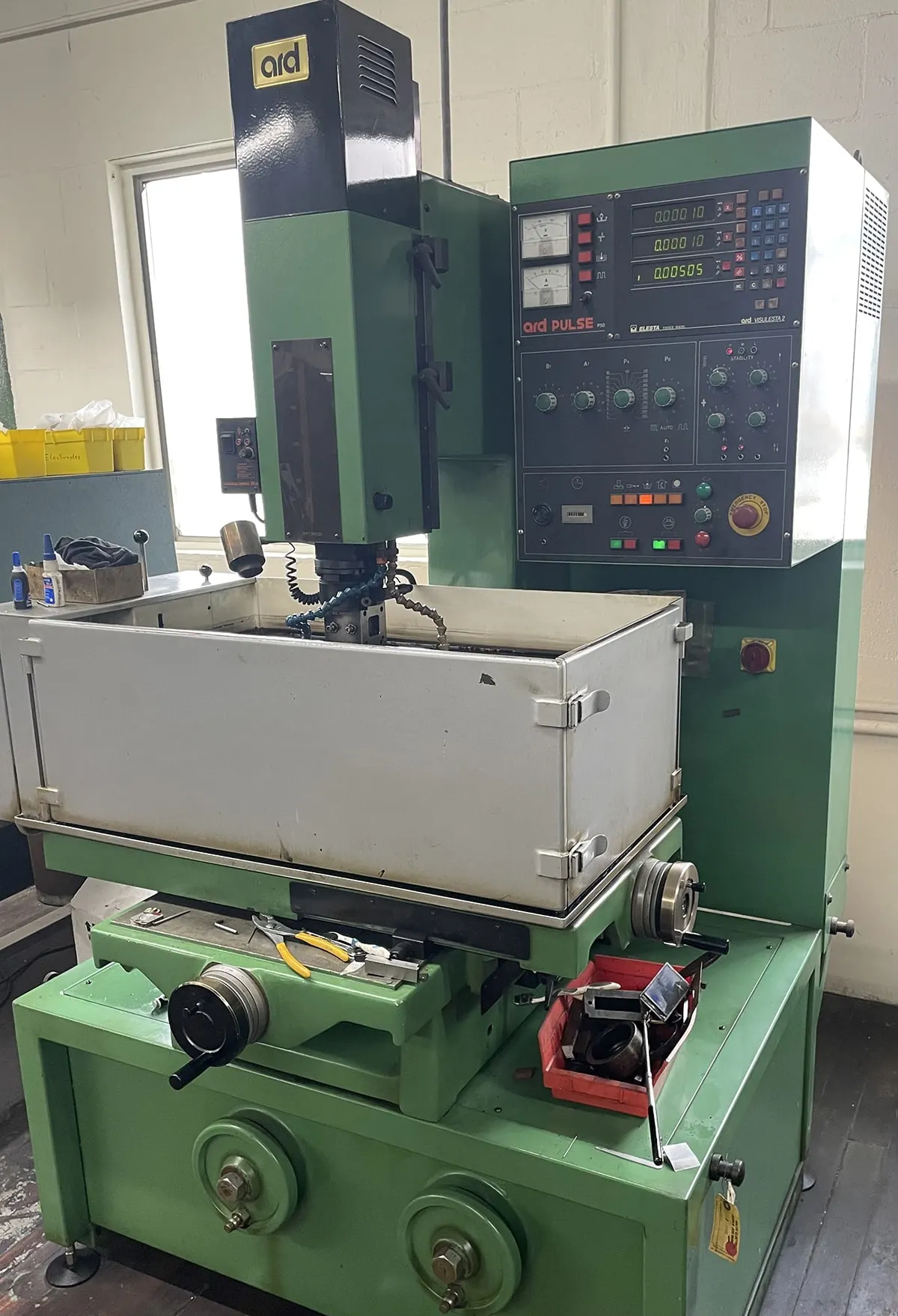
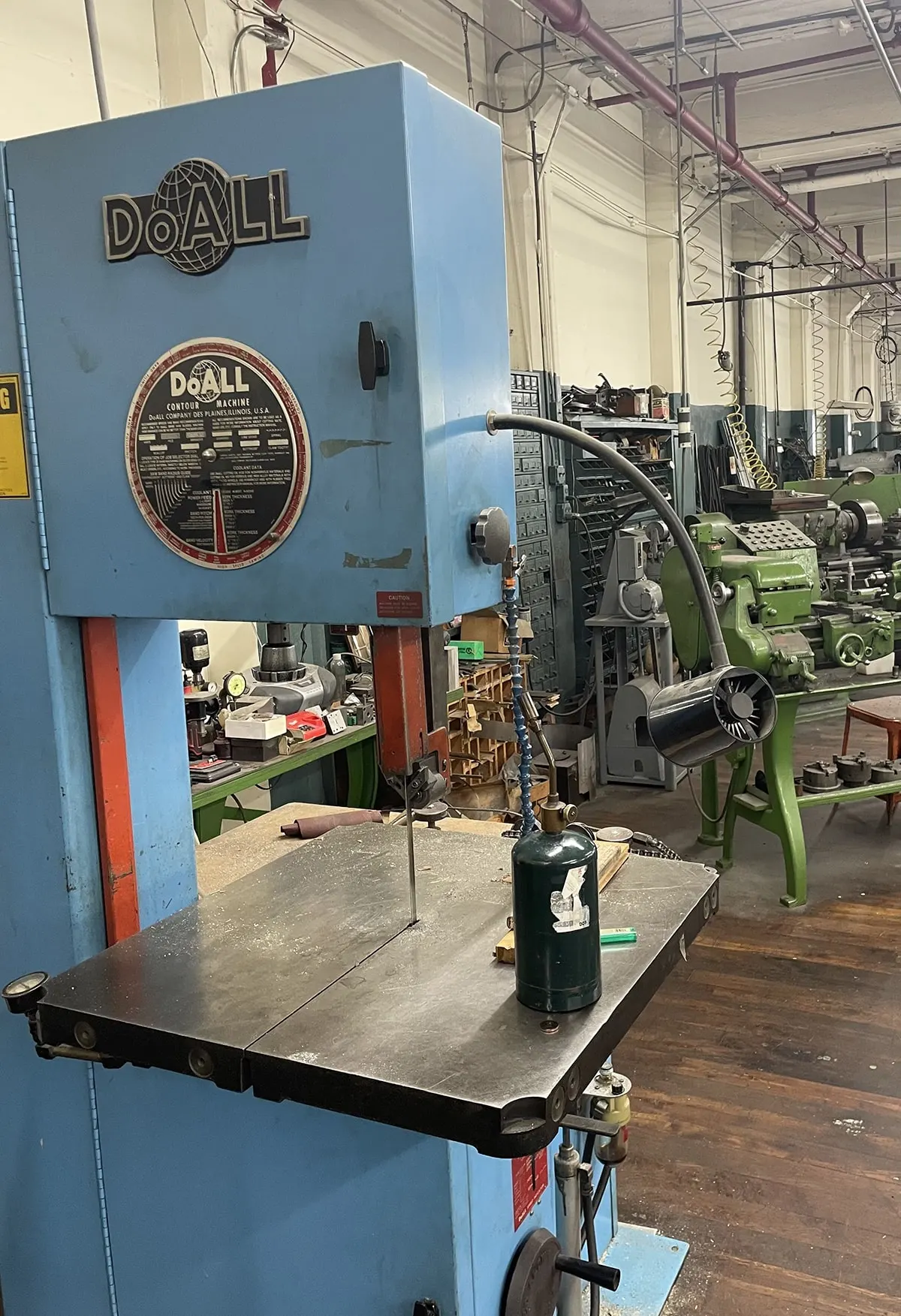
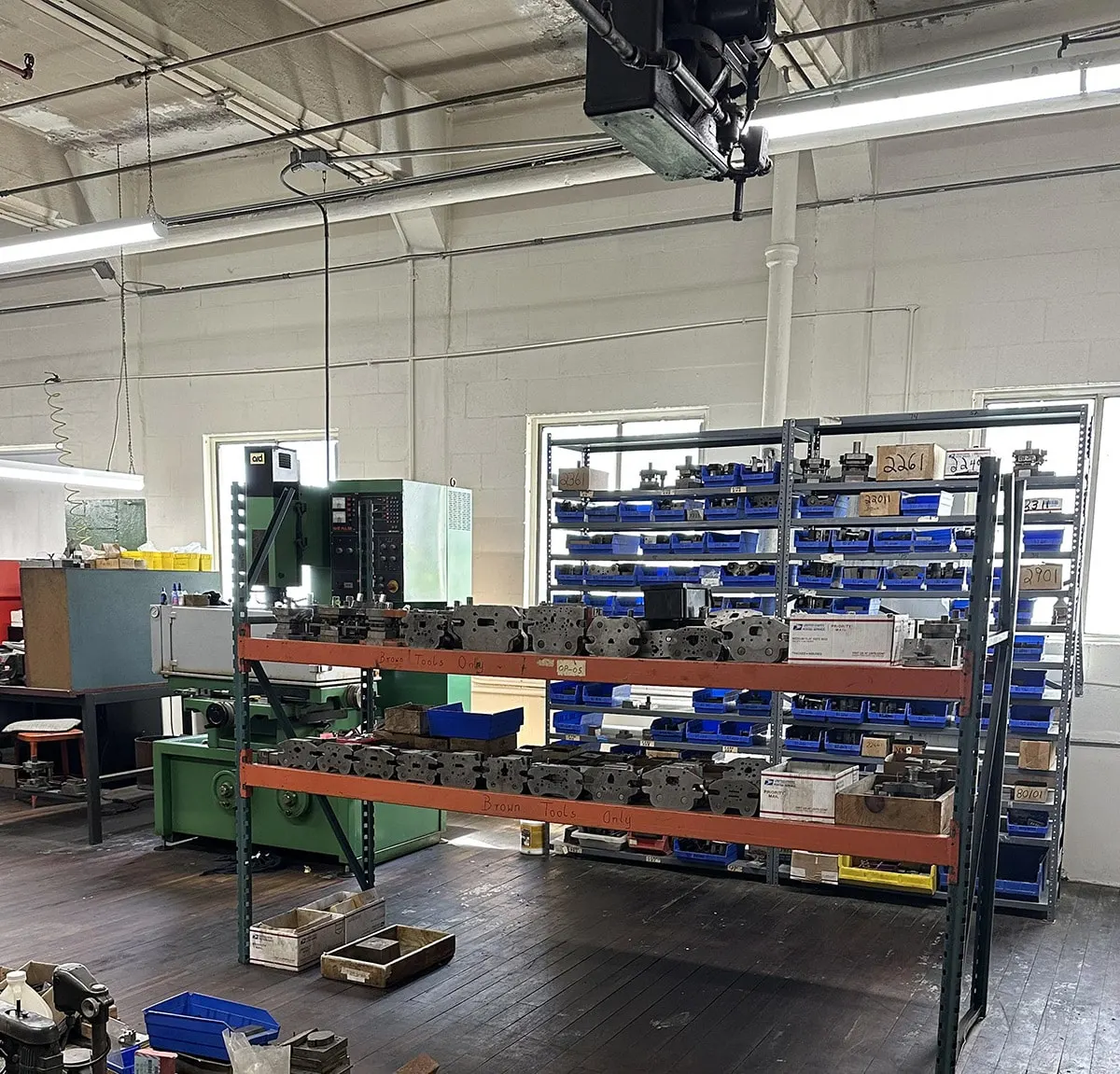
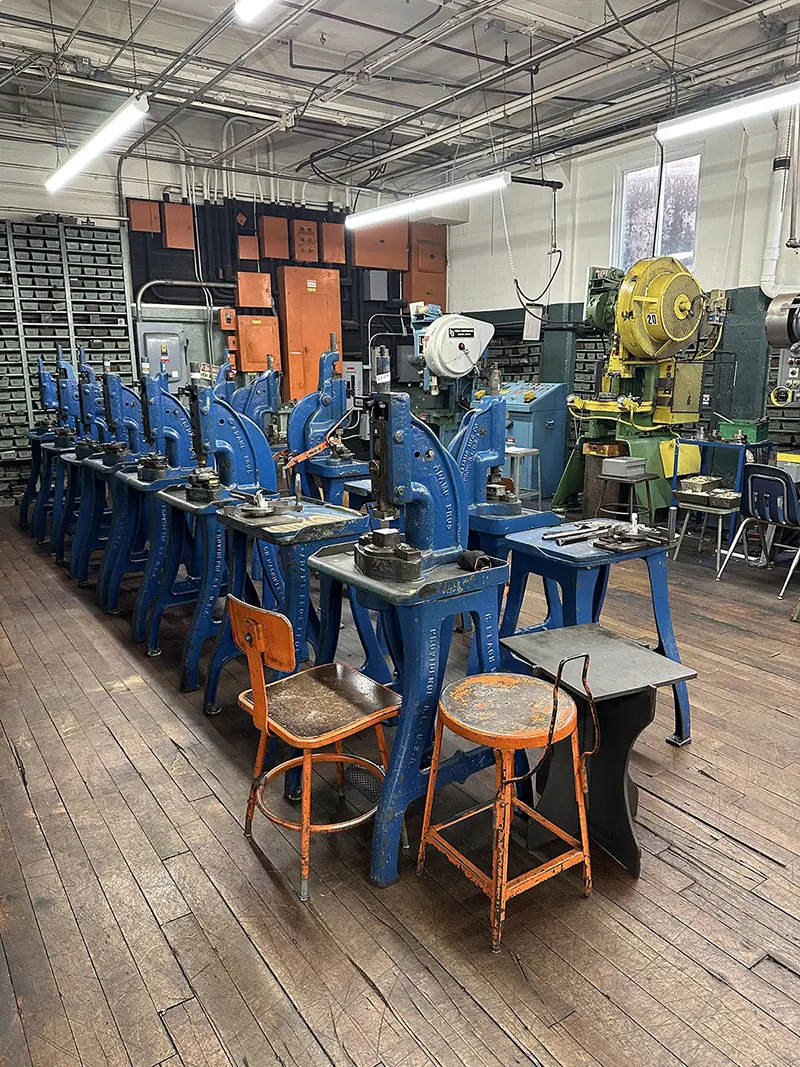
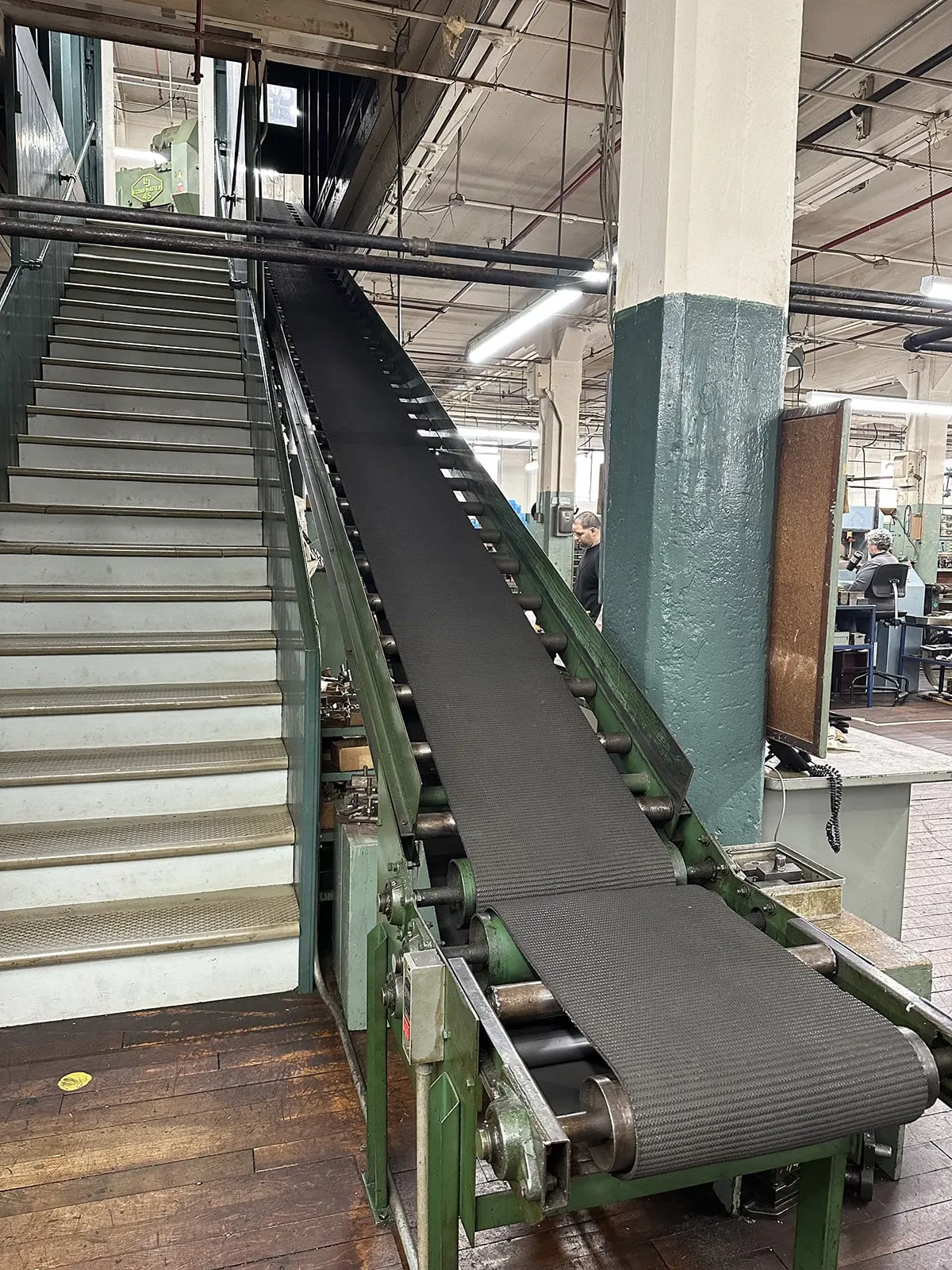
Finished in-house: high polish, satin, sandblast, antique, color fill; plating in gold, karat gold, silver, imitation rhodium. Assembled, packed and shipped from Pawtucket.
Metal stamping & die striking
Die striking presses a metal blank between engraved steel dies to create relief: the process behind badges, medallions, emblems and findings. Blanking, piercing and forming cut and shape sheet metal into flat and formed industrial parts.
We run both kinds of work, from small decorative pieces to production components built to print.
- Processes
- Coining, die striking, and progressive, transfer and automatic stamping, with dies built and maintained in our own tool room; blanking, piercing and forming
- Presses
- TODO: number of presses and types (e.g. mechanical, hydraulic, drop hammer)
- Tonnage range
- TODO: e.g. 20–300 tons
- Die striking size
- Die striking up to 3.5″ diameter and up to .250″ thick
- Max stamped part
- TODO: largest stamped blank / part
- Minimum order
- 3 gross (432 pieces) per item. Smaller runs are available at a higher price. No minimums on sterling silver or gold.
- Lead time
- Typically 3–8 weeks
| Press | Type | Capacity | Qty |
|---|---|---|---|
| TODO: equipment list: make/model, type, tonnage, quantity. A real equipment list is one of the strongest trust signals for industrial buyers. | |||
In-house tool & die
Every job starts with tooling, and ours is designed and built in-house. When an engineering change comes in or a die needs maintenance, it happens on our floor, not in an outside tool shop's queue.
- Die types
- Coining and striking dies, progressive and transfer dies TODO: add blanking, compound or forming dies if applicable
- Die making
- Built and maintained in our own tool room, supported by CNC milling
- Tool ownership
- TODO: who owns tooling the customer pays for
- Tool storage
- TODO: do you store customer dies, and for how long?
- Your tooling
- Have dies or metal already? We’ll run yours.
CNC milling
Our Precision Milling division cuts the dies that stamping depends on, and handles machined parts and secondary operations on stamped work.
- Machines
- TODO: CNC mills: make/model, axes, quantity
- Work envelope
- TODO: max X / Y / Z travel
- Materials machined
- TODO: e.g. tool steel, aluminum, brass
- Work for others
- TODO: do you take standalone machining jobs, or only stamping-related?
Metals we stamp
Ferrous and non-ferrous sheet and strip, chosen for the job: appearance, strength, conductivity or cost.
All metals available, or send us yours.
| Material | Typical uses |
|---|---|
| Brass (230/260) | Findings, emblems, badges, pattern stock |
| Copper | Medallions, findings, emblems |
| Nickel silver | Badges, jewelry components, emblems |
| Sterling silver | Fine jewelry, medallions, awards (no minimum) |
| Fine silver | Fine jewelry and keepsakes |
| Gold & gold filled | Fine jewelry and recognition pieces (no minimum on gold) |
| Stainless steel | Tie bars, money clips, durable components |
| Aluminum | Lightweight parts, tags and plates |
| Cold-rolled steel | Industrial parts, brackets and clips |
| Zinc | Economical decorative parts |
Thickness & gauge reference
The same gauge number means different thicknesses for different metals, so we quote and build to decimal inches. If your print calls out a gauge, this table shows what it means for the two most common systems.
- Die striking
- Up to .250″ thick
- Stamping range
- TODO: stamping gauge range
- Banding widths
- TODO: available banding widths
Stainless steel and aluminum use their own gauge tables; specify decimal thickness for those metals.
| Gauge | Brass, copper, nickel silver B&S / AWG | Carbon steel Mfrs. Std. |
|---|---|---|
| 10 | 0.1019″ | 0.1345″ |
| 12 | 0.0808″ | 0.1046″ |
| 14 | 0.0641″ | 0.0747″ |
| 16 | 0.0508″ | 0.0598″ |
| 18 | 0.0403″ | 0.0478″ |
| 20 | 0.0320″ | 0.0359″ |
| 22 | 0.0253″ | 0.0299″ |
| 24 | 0.0201″ | 0.0239″ |
| 26 | 0.0159″ | 0.0179″ |
| 28 | 0.0126″ | 0.0149″ |
| 30 | 0.0100″ | 0.0120″ |
What we hold, and what drives it
Tolerance on a stamped part depends on material, thickness, feature size and the type of tooling. Thicker material, tighter hole-to-edge distances and formed features all affect what's achievable.
Mark the dimensions that matter on your print. We'll quote to those and tell you up front if any need a different approach.
- Blanked features
- TODO: typical tolerance, e.g. ±.002″–.005″
- Hole locations
- TODO: typical tolerance
- Formed features
- TODO: typical tolerance / bend angle
- Flatness
- TODO: typical
- Machined (milling)
- TODO: typical tolerance
Inspection & documentation
Parts are inspected before they ship. Tell us what documentation your quality system needs.
- Inspection
- TODO: equipment and methods (e.g. calipers, micrometers, optical comparator, CMM)
- First article
- TODO: do you provide FAI reports?
- Material certs
- TODO: available on request?
- Certifications
- TODO: ISO 9001, ITAR registration, etc., or "none"; don't leave blank
What metal stamping processes does Mel-Co-Ed offer?
Die striking, blanking, piercing and forming, supported by in-house tool and die making and CNC milling, all at our facility in Pawtucket, Rhode Island.
Do you build your own stamping dies?
Yes. Tooling is designed and built in-house, with our Precision Milling division handling die work. That keeps engineering changes, repairs and reorders on our schedule.
Should I specify material thickness in gauge or in inches?
Decimal inches are clearest. The same gauge number means different thicknesses for different metals: 20 gauge is 0.0320 in. in the Brown & Sharpe system used for brass and copper, but 0.0359 in. in the standard gauge for carbon steel. Stainless and aluminum gauges differ again.
What thickness range can you stamp?
Die striking up to 3.5″ diameter and up to .250″ thick. For stamped parts, send your material and thickness and we will confirm the fit with our presses and tooling.
What tolerances can you hold on stamped parts?
Achievable tolerances depend on material, thickness and feature size. Call out the critical dimensions on your print and we will tell you what we can hold.